
What is energy monitoring?
Definition of energy monitoring
Energy monitoring refers to the continuous collection, analysis and visualisation of energy consumption data in businesses, local authorities and public institutions. The aim is to highlight consumption patterns, identify potential savings and measurably optimise energy use.
Unlike a one-off energy analysis, energy monitoring provides continuously updated data – from electricity meters, gas meters, heat meters, sensors or building management systems. This data forms the basis for informed decisions in energy management, for compliance with legal requirements and for certification to ISO 50001.
Why an Energy Monitoring System is indispensable for businesses today
Rising energy prices, statutory reporting requirements (e.g. EDL-G, EnEfG) and the pressure to achieve carbon neutrality make professional energy monitoring a key component of corporate responsibility. If you do not know your energy consumption, you cannot reduce it in a targeted manner.
A professional energy monitoring system creates transparency in this area and provides the data foundation for:
- Cost savings through the early detection of wastage, peak loads and inefficient systems
- Reducing CO₂ emissions as part of climate strategy and sustainability reporting
- Compliance with statutory reporting requirements, for example in the context of energy audits or ISO 50001 certification
- Optimisation of energy procurement, as accurate consumption profiles enable realistic forecasts
- Early detection of faults in machinery and plant before they lead to costly breakdowns
Industrial Energy Monitoring
Energy monitoring plays a particularly important role in the industrial sector. Transparent consumption data helps to operate production facilities and technical infrastructure more efficiently, reduce energy costs and identify specific opportunities for savings.
Energy Monitoring for Local Authorities
Local authorities play an important role in setting an example when it comes to climate action and the energy transition. Energy monitoring provides transparency regarding the energy consumption of buildings and infrastructure, helping to reduce energy costs, achieve climate action targets and operate public facilities more efficiently.
Role in energy management
Energy monitoring is a key component of energy management. It provides the data required to make energy consumption transparent, to establish energy performance indicators (EnPIs), to identify potential savings and to track the effectiveness of measures. In doing so, it supports energycontrolling as well as the requirements of ISO 50001 and lays the foundation for a continuous improvement process.
How modern energy monitoring works
A high-performance energy monitoring system generally involves four steps:
- Automatic energy data collection – consumption data is read directly from meters, sensors, building management systems or third-party systems, rather than being recorded manually.
- Centralised data management – All data is consolidated in a central software solution, where it is structured, verified and archived.
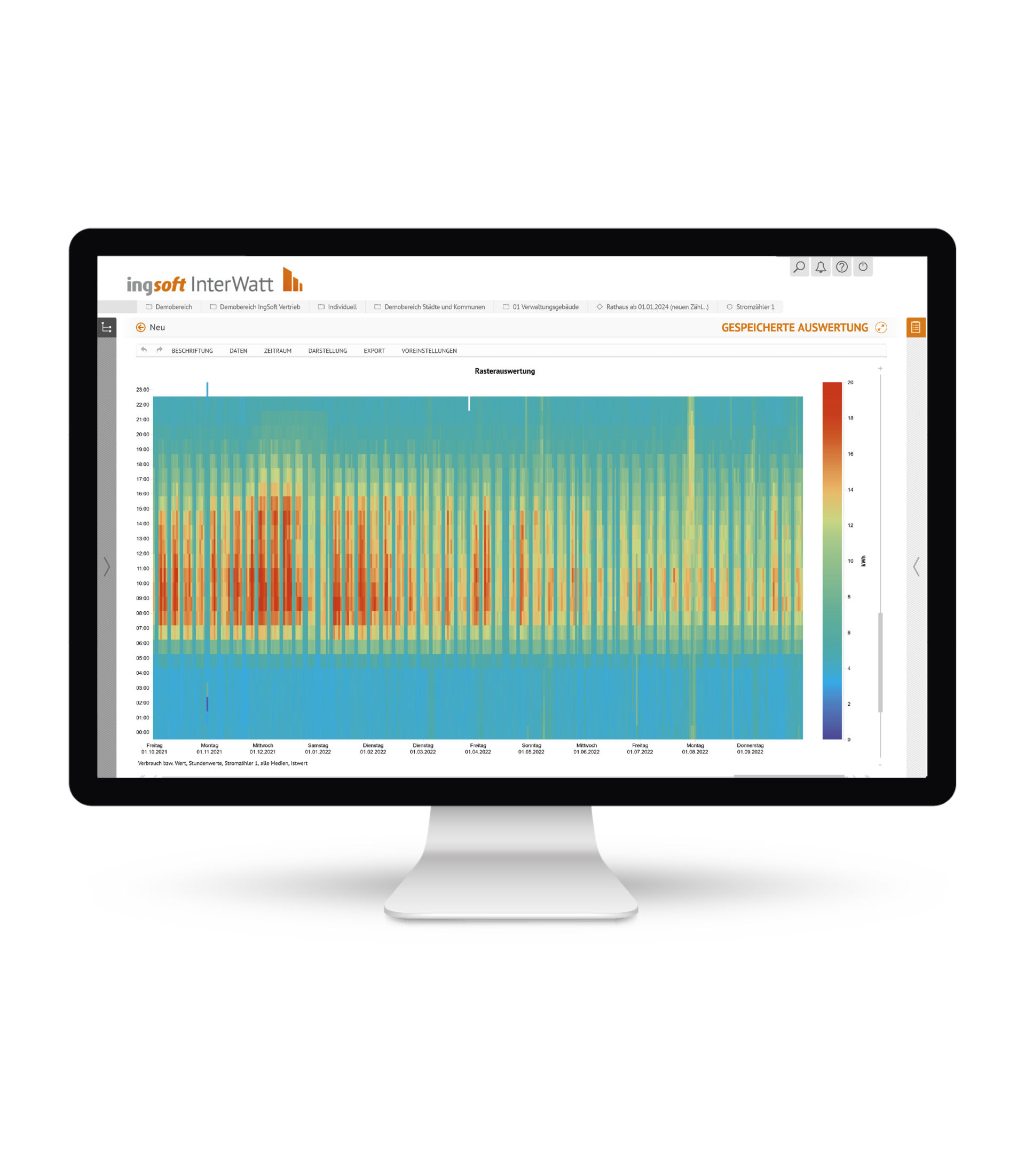
- Analysis and pattern recognition – With the help of dashboards, reports and, increasingly, AI-supported pattern recognition, anomalies such as peak loads, base load issues or irregularities are automatically detected.
- Derivation of measures – Based on the analyses, specific cost-saving measures can be planned and implemented, with their effectiveness subsequently verified through monitoring.
AI-based energy monitoring: the next step
Traditional monitoring shows what has happened. Modern, AI-based approaches, such as the pattern recognition feature in IngSoft InterWatt, go one step further: they automatically detect deviations from expected consumption, raise the alarm in the event of anomalies and identify opportunities for optimisation that are often lost amidst the raw data.
This significantly reduces the manual effort involved in analysis and makes energy management manageable even within large, complex corporate structures with numerous properties and metering points.
Energy Monitoring with IngSoft InterWatt
IngSoft InterWatt is one of the market-leading software solutions for energy management, energy data collection and energy monitoring in Germany. Since 1997, IngSoft has been helping businesses, local authorities and energy suppliers to sustainably reduce energy consumption, costs and CO₂ emissions.
Key benefits at a glance:
- Automatic data collection from almost all standard meters, sensors and third-party systems
- Clear dashboards for rapid decision-making at all levels of the organisation
- AI-powered pattern recognition for the early identification of potential savings
- Well-founded reports for internal controlling, management review and external reporting requirements
- Full support for ISO 50001 certification as well as other energy, climate and environmental management standards
- Suitable for use across all sectors and customisable to meet evolving requirements
Conclusion
Energy monitoring is the fundamental prerequisite for effective energy management. Only by continuously and comprehensively tracking energy consumption can organisations identify potential savings, reduce costs and reliably meet regulatory requirements. Specialised software such as IngSoft InterWatt allows this process to be largely automated – from data collection right through to the implementation of specific measures.
Get to know IngSoft InterWatt during a free introductory session and discover how energy monitoring can lead to measurable savings in your business too.
Book a free introductory meeting
Get a personalised insight into our energy and climate management software, IngSoft InterWatt
Other relevant topics
Events
All eventsNews
All news