Introduction of energy management software as a complex IT project
The Swiss Federal Office for Buildings and Logistics BBL (hereinafter referred to as BBL) has fundamentally reorganised its energy management system in a large-scale HERMES project and is currently in the process of expanding it further.
Find out below what challenges arise when introducing energy management software as a demanding large-scale IT project and what factors act as accelerators for project implementation.
High regulatory requirements
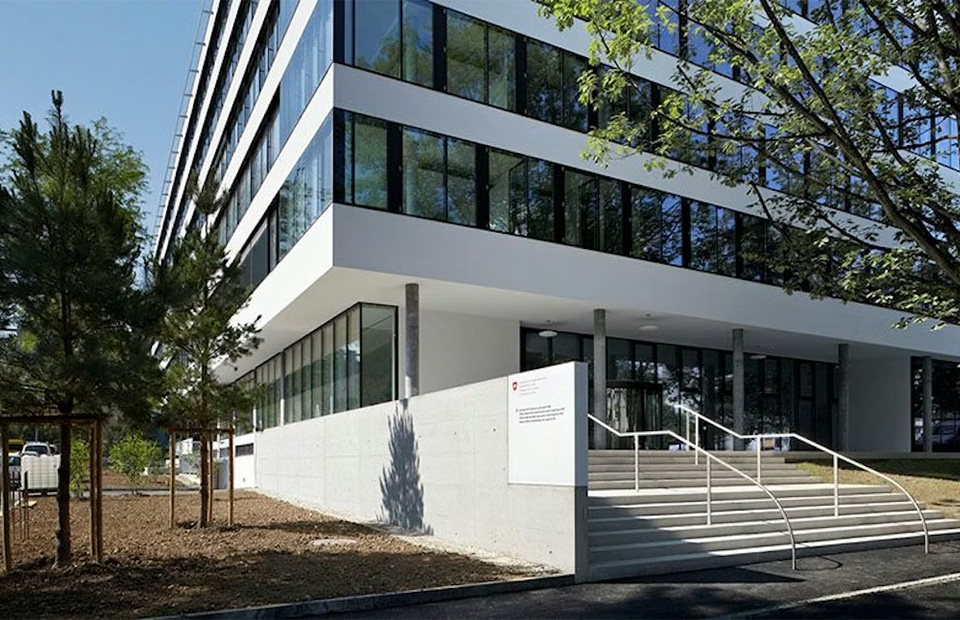
The Federal Office for Buildings and Logistics FOBL is responsible for housing the civilian units of the Federal Administration in Switzerland and worldwide. The project comprised a large and heterogeneous portfolio of around 750 properties in Switzerland . These include administrative and research buildings as well as technical facilities. Properties and sites abroad, such as embassies and consulates, are also to be integrated into the energy management system in the future if possible.
The BBL has a role model function in the fulfilment of the applicable legal requirements in the area of energy and climate. In connection with energy management, these include
- the Federal Act on Climate Protection Targets, Innovation and Strengthening Energy Security CIG,
- the Energy Act EnG and
- extensive data provision and verification obligations in accordance with the Ordinance on Federal Real Estate Management and Logistics VILB

Initial situation
Data was previously recorded heterogeneously using Microsoft Excel, PDF forms and SAP customisation, which led to numerous media disruptions, limited data quality and a high level of manual effort. The incentive for a more professional solution was therefore high.
WTO tender
The WTO tender was designed on the basis of an initialisation study and carried out with the involvement of an external tendering specialist. An IT solution for energy data management was sought that covered the following requirements:
Priority 1
- Fulfilment of the legal requirements: The top priority was to replace the existing system in order to fulfil the statutory performance mandate in accordance with the Ordinance on Federal Real Estate Management and Logistics VILB. In addition, the system was to support the implementation of the legal requirements in the area of climate protection and energy and make energy management digital, efficient and future-proof .
- Accurate energy data collection for properties
- Forecasting options
Priority 2
- Efficient evaluation of raw data in a centralised system
- Automated data collection
- Utilisation of existing data sources
- Customisation options for existing processes and responsibilities (BBL internal)
In addition, a comprehensive catalogue of system requirements was defined and used for the evaluation. Aspects of IT security and data protection were an important part of this. It contained the following requirements, for example:
- Connection to the federal government's central access and authorisation system eIAM
- Private cloud SaaS solution with server location in Switzerland
- Protection against denial-of-service attacks
- Recoverability of the system including all data and configurations
- Ensuring compatibility with current third-party libraries
- Analysis and evaluation of relevant key figures
- Configurable interfaces to different data sources
New from IngSoft's point of view were the award criteria regarding the sustainability of the software provider itself, which were assessed in the evaluation of the WTO tender. Specifically, the following was required: "The operation of the software on the servers or cloud solution used for this purpose is climate-neutral in the sense of net zero and the provider reduces the greenhouse gas emissions of its own business activities through the operation of the office premises and business travel activities through suitable measures (Scope 1 -3)."
WTO evaluation
IngSoft InterWatt won the WTO tender for a suitable software solution that, among other things, best fulfils the aforementioned requirements as defined by the BBL.
The software offers a scalable IT solution for recording, analysing, plausibilising and monitoring energy data that meets the high data protection and IT security requirements of a complex large-scale project.
Successful implementation despite organisational complexity
In the realisation and introduction phases, we then got down to implementing the software. Technically, this was not an extraordinary challenge. Special requirements arose from the trilingual implementation and the specified data location of Switzerland, which IngSoft was able to realise without any major challenges.
The greatest complexity was primarily at an organisational level: numerous stakeholders - from data governance and IT architecture to data users, data suppliers and object managers - were involved in the project implementation. In addition, the high formal requirements for IT security had to be met and external penetration tests had to be passed. As ISO 27001-certified software provider, IngSoft is well prepared for this.
Success factors of the project
The introduction of energy management software at this level of complexity is no easy task. The fact that the implementation nevertheless went so quickly and smoothly is due to the following factors in particular - in addition to the professional approach of all those involved:
- Software-as-Service approach:
IngSoft InterWatt's SaaS approach facilitated the introduction for several reasons:- Fewer internal organisational interfaces
- Simpler IT structures
- Clear responsibility
- Simpler support
- Faster response options in the event of problems or new challenges
- Clearly defined implementation concepts:
Detailed concepts drawn up in advance (integration, migration, training and operating concepts) served to ensure a smooth implementation process and also guaranteed traceability. - External project manager:
An additional external IT co-project manager, financed by the BBL, ensured clear focussing of all parties involved, adherence to deadlines and efficient project management in IT matters. - Legal mandate:
The legal mandate was a strong motivator for everyone involved. It also served as an important argument to prevent the process from stalling.
Outlook: Further development of energy management
Following the successful implementation and commissioning of IngSoft InterWatt, BBL plans to further expand its own energy management in the future. The following is currently being planned and implemented:
- Automatic data acquisition with 15-minute periodicity,
- the use of pattern recognition to ensure optimal energy operation,
- the creation of key figures for sustainability reporting and
- more efficient visualisation of detailed evaluations for energy-related operational optimisation at building and plant level.
On the software side, IngSoft InterWatt already offers the necessary prerequisites for realising these industry standards.
Conclusion
The project impressively demonstrates that IngSoft InterWatt is a powerful, secure and future-proof solution that meets the necessary IT security and data protection requirements , not only for small and medium-sized organisations, but also for complex organisations.
With an experienced software provider like IngSoft at your side, who knows the requirements and hurdles in IT project management, you can successfully introduce energy management software even in demanding system landscapes.
Do you have questions about this use case or about our energy management software?